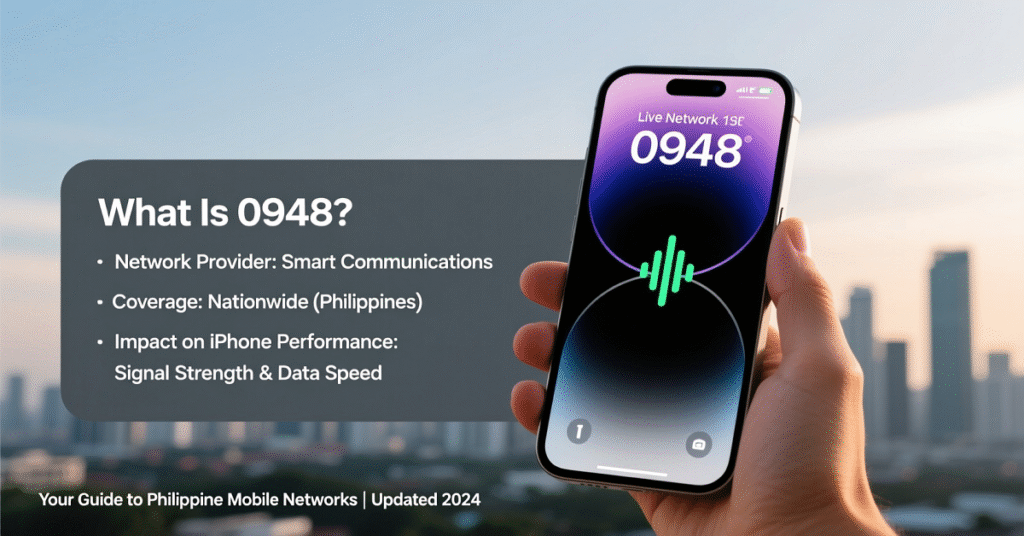
What Network 0948? You’ve just scored what seems like an incredible deal on a used iPhone. The price is right, the condition looks perfect, and you’re ready to pop in your SIM card and start using it. But then—nothing. Your phone won’t connect. The dreaded “SIM Not Supported” message flashes across your screen, leaving you wondering whether the issue is the phone, the SIM, or the network behind the 0948 prefix.
Welcome to the frustrating world of carrier-locked iPhones and network restrictions. If you’ve encountered the term “0948 network iPhone,” you’re not alone. Thousands of iPhone users discover too late that their device is locked to a specific carrier, limiting their freedom to switch providers, travel internationally, or even sell their phone for a fair price.
This comprehensive guide will walk you through everything you need to know about the 0948 network identifier, how carrier locking works, and most importantly—how to unlock your iPhone and take back control of your mobile experience.
What Is the 0948 Network? Decoding the Mystery
Understanding Network Identifiers
The “0948 network” is a mobile network code that identifies a specific cellular carrier’s infrastructure. Think of it as a postal code for mobile networks—it tells your iPhone which carrier system it should connect to for calls, texts, and data services.
Mobile Network Codes (MNC) work alongside Mobile Country Codes (MCC) to create a unique identifier for every carrier worldwide. When your iPhone displays “0948,” it’s showing you which network it’s configured to work with, similar to how your device shows “Verizon” or “T-Mobile” in the status bar.
The Connection Between 0948 and Carrier Locking
Here’s where things get complicated. When carriers sell iPhones at discounted prices—often hundreds of dollars below retail—they lock the device to their network using these identifiers. The 0948 network code becomes a digital leash, ensuring you can’t simply take that subsidized phone to a competitor.
Apple implements this restriction at the firmware level through your iPhone’s IMEI number (International Mobile Equipment Identity). When you insert a SIM card, your iPhone checks a database to verify whether it’s authorized to work with that carrier. If the IMEI is registered to the 0948 network and you’re trying to use a different carrier’s SIM, your iPhone will refuse to activate.
This isn’t Apple being deliberately restrictive—it’s fulfilling contractual obligations with carriers who sell iPhones at reduced prices. The trade-off is clear: pay less upfront, but accept limited carrier flexibility until the phone is unlocked.
Common Carriers Associated with 0948
The 0948 network identifier appears most frequently in European and Middle Eastern markets. While specific carrier associations can vary by region, this code has been linked to:
- Regional mobile virtual network operators (MVNOs)
- Smaller national carriers in specific countries
- Reseller agreements with larger network providers
The challenge with identifying exact carriers is that network codes can be reassigned, and carriers sometimes share infrastructure. If you’re seeing 0948 on your iPhone, the most reliable way to identify the specific carrier is to check your device’s purchase history or contact Apple Support with your IMEI number.
How Carrier Locking Actually Works on iPhones
The Technical Side: Apple’s Locking Mechanism
When you purchase a carrier-locked iPhone, something invisible but powerful happens behind the scenes. Your device’s unique IMEI number gets registered in Apple’s activation server database, which contains millions of records linking specific iPhones to specific carriers.
Every time you restart your iPhone or insert a new SIM card, your device communicates with Apple’s servers. This activation check happens in seconds, but it determines whether your phone will work with that SIM card. If the server says “this IMEI is locked to 0948 network,” your iPhone won’t proceed with activation, regardless of which SIM you’ve inserted.
This is purely a software lock, not a hardware limitation. Your iPhone physically contains all the necessary radios and antennas to work with multiple carriers—the restriction exists only in Apple’s database. That’s why unlocking can happen remotely without any physical modifications to your device.
When and Why iPhones Get Locked to 0948
Carrier locking typically happens in these scenarios:
Contract Purchases: When you sign a 24-month contract and get an iPhone for $0-$200 instead of the $800-$1,200 retail price, the carrier locks it to recoup their subsidy investment.
Installment Plans: Even without traditional contracts, carriers offering monthly payment plans often lock devices until you’ve completed all payments.
Promotional Offers: “Switch to our network and get a free iPhone” deals almost always involve locked devices with service requirements.
Refurbished and Second-Hand Sales: This is where many buyers get caught off guard. A phone that was originally locked might still be locked when resold, especially if the original owner didn’t complete their contract obligations.
According to industry data, approximately 40% of used iPhones sold through peer-to-peer marketplaces remain carrier-locked, often without the seller’s knowledge. This has created a secondary market problem where buyers discover restrictions only after purchase.
The Difference Between Locked, Unlocked, and “Blacklisted”
Understanding these terms is crucial:
Locked: Your iPhone will only work with SIM cards from one specific carrier. You can still use it fully on that carrier’s network.
Unlocked: Your iPhone accepts SIM cards from any compatible carrier worldwide. This is the unrestricted state most users want.
Blacklisted: Your iPhone’s IMEI has been reported as lost, stolen, or associated with unpaid bills. This is different from being locked—a blacklisted phone won’t work on any carrier in that country, even the original one.
A “SIM-free” iPhone from Apple’s website means it comes unlocked from the factory and has never been associated with any carrier. These cost full retail price but offer maximum flexibility.
Real-World Impact: How 0948 Network Affects Your iPhone Experience
Network Compatibility Limitations
Modern iPhones support multiple cellular technologies, but carrier locking restricts which networks your device can actually access. Here’s what this means practically:
GSM vs CDMA: While newer iPhones (iPhone 7 and later) support both technologies, a locked phone can’t take advantage of this flexibility. If your 0948-locked iPhone is registered to a GSM carrier, you won’t be able to switch to CDMA-based networks, even though your hardware supports it.
4G LTE Band Limitations: Carriers use different frequency bands for 4G LTE service. AT&T primarily uses bands 2, 4, 5, 12, and 17 in the US, while T-Mobile emphasizes bands 2, 4, 12, and 71. A locked iPhone might not optimize for another carrier’s band configuration, potentially giving you slower speeds even if technically compatible.
5G Network Restrictions: The newest 5G networks operate on multiple spectrum bands—low-band (sub-6GHz) and high-band (mmWave). Being locked to the 0948 network means you’re stuck with that carrier’s 5G infrastructure and coverage map, which can vary dramatically by region.
Data Speed and Performance Constraints
Your carrier’s network infrastructure directly impacts your iPhone’s real-world performance. Here’s what the data shows:
Independent testing by OpenSignal in 2024 revealed average 5G download speeds varying from 95 Mbps to 335 Mbps across different carriers in the same city. If you’re locked to a carrier with congested infrastructure, you’re experiencing slower speeds even though your iPhone hardware is capable of much more.
Network prioritization also plays a role. During peak usage times, carriers deprioritize certain customers based on their plan type. If your 0948-locked iPhone is on a lower-tier plan, you might experience significant slowdowns during evening hours when network traffic peaks—typically between 7-10 PM when users stream video and download content.
For practical tasks, this translates to:
- Streaming: Buffering on HD video when you should be getting 4K quality
- Gaming: Higher latency affecting competitive online gaming
- Video calls: Lower quality or dropped connections during family FaceTime calls
- Large downloads: Apps and iOS updates taking 2-3 times longer than necessary
International Travel Complications
This is where carrier locking becomes most frustrating. Imagine landing in Paris for vacation, excited to share photos on Instagram, only to discover your 0948-locked iPhone can’t connect to local networks.
Roaming Fees Reality Check: Major US carriers charge $5-$10 per day for international roaming, which adds up to $150-$300 for a three-week trip. Meanwhile, a local European SIM card costs €15-€30 for the entire month with more data than you’ll likely use.
Coverage Gaps: The 0948 network may have roaming agreements with international partners, but coverage quality varies dramatically. You might have service in London but none in rural Scotland, or expensive roaming in Japan but no service at all in Vietnam.
Emergency Situations: In urgent situations abroad—lost luggage, missed connections, medical emergencies—a locked iPhone that can’t access local networks becomes a serious liability. Even emergency calls work better on local networks than through roaming connections.
Hidden Costs of Staying Locked
Let’s look at the real financial impact over a typical 24-month period:
Scenario: You keep your 0948-locked iPhone vs switching to a better value carrier
- Current carrier (locked): $85/month = $2,040 over 24 months
- Better value carrier (unlocked): $55/month = $1,320 over 24 months
- International travel (2 trips/year): Additional $200 in roaming fees vs $60 for local SIMs
- Total difference: $860 saved over two years by having an unlocked iPhone
This doesn’t include opportunity costs like missing out on promotional offers from other carriers or being unable to add family members to more affordable family plans.
How to Check If Your iPhone Is Locked to 0948 Network
Before you can unlock your iPhone, you need to confirm its status. Here are five reliable methods:
Method 1: Built-in iPhone Settings Check
This is the quickest method for iPhones running iOS 14 or later:
- Open the Settings app
- Tap General
- Select About
- Scroll down to Carrier Lock or Network Provider Lock
If you see “No SIM restrictions,” your iPhone is unlocked. If you see a carrier name or “SIM locked,” your device is restricted to that specific network.
Important note: On older iOS versions (iOS 13 and earlier), this field may not appear. If it’s missing, use one of the alternative methods below.
Method 2: Physical SIM Card Test
This is the most definitive test:
- Power off your iPhone completely
- Remove your current SIM card using the ejector tool (or a paperclip)
- Insert a SIM card from a different carrier
- Power on your iPhone
What the results mean:
- Phone activates normally → Your iPhone is unlocked
- “Invalid SIM” or “SIM Not Supported” error → Your iPhone is locked
- “Activation Lock” message → Different issue related to Find My iPhone, not carrier locking
Be careful when swapping SIM cards. The tray is delicate, and forcing it can cause permanent damage. If the SIM card doesn’t slide in smoothly, double-check that it’s properly aligned.
Method 3: Using Apple’s Official Checker
Apple doesn’t offer a public IMEI checker, but you can get official lock status information:
Finding your IMEI:
- Settings > General > About > IMEI
- On the original iPhone box (printed on the label)
- In the SIM tray slot on some iPhone models
- In iTunes/Finder when your iPhone is connected to a computer
Once you have your IMEI, contact Apple Support through their website or by calling 1-800-MY-APPLE. They can look up your device in their database and tell you definitively whether it’s locked and to which carrier.
Method 4: Carrier Customer Service
Calling your suspected carrier is straightforward but requires knowing which carrier might have locked the device. Have this information ready:
- Your iPhone’s IMEI number
- Where and when you purchased the device
- Your account information (if you’re the original purchaser)
Customer service representatives can instantly check their internal systems. They’ll tell you not only if the phone is locked but also whether you’re eligible to unlock it.
Method 5: Third-Party IMEI Checkers
Websites like IMEI.info, CheckMEND, and others offer IMEI lookup services. Some are free; others charge $2-$10 for detailed reports.
Pros:
- Fast results (often within minutes)
- Provides additional information like warranty status and model details
- Useful when you don’t have immediate access to the phone
Cons:
- Accuracy varies by service
- Some require payment before showing results
- Privacy concerns about entering your IMEI on third-party sites
- May not reflect very recent unlocks (database updates can lag by 24-48 hours)
Recommendation: Use third-party checkers only as a supplementary verification method, not as your primary source. The built-in iPhone check and carrier confirmation are more reliable.
Complete Guide to Unlocking Your iPhone from 0948 Network
Understanding Eligibility Requirements
Before requesting an unlock, you need to meet your carrier’s specific requirements. While these vary, common eligibility criteria include:
Contract Completion: If you purchased your iPhone with a service contract, you typically must complete the entire contract term—usually 24 months. Early termination fees can range from $200-$350 depending on how much time remains.
Payment in Full: For installment plans, you must complete all monthly device payments. If you owe $400 remaining on a $1,000 iPhone, the carrier won’t unlock it until that balance reaches zero.
Account Standing: Your account must be in good standing with no past-due balances. Even a $15 unpaid overage charge can prevent unlock approval.
Active Service Duration: Some carriers require the device to be active on their network for a minimum period, typically 40-60 days, even if you bought it outright. This prevents people from buying iPhones at promotional prices and immediately unlocking them.
Military Exception: Active-duty military personnel with deployment orders can often get early unlocks regardless of contract status. You’ll need to provide official documentation.
Official Carrier Unlock Process (Step-by-Step)
Here’s how to unlock your iPhone through official channels:
Pre-Unlock Checklist:
- ✓ Verify your IMEI number
- ✓ Confirm you meet all eligibility requirements
- ✓ Pay any outstanding account balances
- ✓ Back up your iPhone (via iCloud or computer)
- ✓ Know your account PIN or security password
The Request Process:
- Contact Your Carrier: Most carriers offer three request methods:
- Online portal (fastest): Log into your account and find the “Unlock Device” section
- Phone: Call customer service and request an unlock
- In-store: Visit a carrier retail location
- Provide Required Information:
- Account holder name and account number
- iPhone IMEI number
- Phone number associated with the device
- Reason for unlock request (travel, switching carriers, etc.)
- Wait for Confirmation: Processing times vary by carrier:
- Verizon: Postpaid devices unlock automatically after 60 days; prepaid after 60 days of service
- AT&T: 5-7 business days for active customers; 10-14 days for former customers
- T-Mobile: 2 business days for postpaid; up to 2 days for prepaid
- Regional carriers: 3-15 business days typically
- Complete the Unlock: Once approved, you’ll receive instructions via email or text. The process usually involves:
- Removing your current SIM card
- Connecting to iTunes/Finder on a computer
- Inserting a different carrier’s SIM card
- Restarting your iPhone
Your iPhone will communicate with Apple’s activation servers, which will remove the lock from your IMEI record. This happens automatically—you don’t need to enter codes or install software.
Third-Party Unlocking Services: The Complete Truth
When official carrier unlocking isn’t possible, third-party services become tempting. Here’s what you need to know:
How They Actually Work: Legitimate third-party services have connections with carrier employees or access to carrier systems. They submit unlock requests on your behalf, often using workarounds or exploiting policy loopholes. They’re not “hacking” your phone—they’re navigating carrier bureaucracies.
Cost Comparison:
- Official carrier unlock: $0 (if eligible) to $50 (if paying off remaining balance)
- Third-party services: $20-$150 depending on carrier and iPhone model
- Scam services: Often advertise “$5 unlocks”—avoid these
Success Rates: Reputable third-party services report 85-95% success rates for standard unlocks. Failures usually occur with blacklisted devices, very new iPhones (released within the past 3 months), or iPhones with outstanding finance balances exceeding $500.
Red Flags to Watch For:
- Guarantees of instant unlocking (real unlocks take 1-7 days minimum)
- Requests for your Apple ID password (never necessary)
- “Software unlocks” or “jailbreak required” (these don’t work on modern iPhones)
- No refund policy if unlock fails
- Poor grammar or unprofessional websites
- Prices significantly lower than competitors
When Third-Party Services Make Sense:
- You purchased a used iPhone that’s locked and can’t contact the original owner
- You’re no longer a customer of the locking carrier
- The carrier has gone out of business or merged with another company
- You’re located outside the carrier’s service country
- Official unlock has been denied for technical reasons beyond your control
Recommended Approach: If using third-party services, start with one that offers a money-back guarantee if the unlock fails. Read recent reviews on independent platforms like Trustpilot, and verify the service has been in business for at least 2-3 years.
What to Do If Your Unlock Request Is Denied
Carrier denial isn’t the end of the road. Here’s your escalation path:
Step 1: Understand Why Request specific denial reasons in writing. Common causes include:
- Outstanding balance (even small amounts)
- Insufficient active service time
- Reported as lost or stolen
- Still under contract or payment plan
- Account irregularities
Step 2: Address the Issue
- Pay off any remaining balances immediately
- Wait if you’re close to meeting time requirements
- Dispute any errors in your account records
Step 3: Escalate Within the Carrier If the denial seems unjustified:
- Ask to speak with a supervisor or retention department
- Reference specific policy language from the carrier’s website
- Document all conversations with dates, times, and representative names
- Submit a formal written appeal
Step 4: File a Complaint If internal escalation fails:
- FCC Complaint: File at consumercomplaints.fcc.gov
- Better Business Bureau: Submit a complaint at bbb.org
- State Attorney General: Consumer protection divisions often mediate
- Small Claims Court: For clear contract violations
Step 5: Consider Alternatives
- Wait out the remaining contract/payment period
- Sell the phone as locked (disclosing this clearly to buyers)
- Use it as a secondary device on the original network
- Trade it in to the carrier for credit toward an unlocked device
Pros and Cons: Is Unlocking Right for You?
Clear Advantages of Unlocking
1. Carrier Switching Freedom The average American household can save $480-$840 annually by switching from major carriers to MVNOs (Mobile Virtual Network Operators) that use the same network infrastructure. With an unlocked iPhone, you can:
- Compare plans across all carriers without restriction
- Take advantage of promotional offers and new customer discounts
- Switch carriers immediately if service quality declines
- Avoid loyalty penalties that lock you into rising prices
2. International Travel Savings Based on 2024 data, here’s what you save per two-week international trip:
- Major carrier roaming: $140-$280
- Local SIM card: $15-$40
- Savings: $100-$240 per trip
For frequent travelers, this pays for an iPhone unlock many times over.
3. Resale Value Increase Market data from sites like Swappa and eBay shows:
- Unlocked iPhone 14 Pro: Sells for $670-$750 (used, good condition)
- Carrier-locked iPhone 14 Pro: Sells for $550-$640
- Value difference: $80-$150
This represents an 18-22% higher resale value for unlocked devices.
4. MVNO Access Unlocking opens access to 50+ MVNOs offering competitive plans:
- Mint Mobile: $15/month for 5GB data
- Visible: $25/month for unlimited
- Google Fi: $20/month for unlimited calls/texts + pay-per-GB data
- Cricket Wireless: $30/month for 10GB
These providers use major carrier networks (Verizon, T-Mobile, AT&T) but at fraction of the cost.
5. Dual SIM Optimization iPhone XS and newer models support dual SIM functionality (one physical SIM, one eSIM). With an unlocked device, you can:
- Use a local SIM while traveling while keeping your home number active on eSIM
- Separate work and personal lines without carrying two phones
- Take advantage of the best data plan and best calling plan from different carriers simultaneously
Potential Disadvantages and Risks
1. Unlock Fees and Timing Some carriers charge unlock fees ranging from $0-$50. If you need to pay off a remaining device balance to become eligible, you might need to pay hundreds upfront to unlock.
2. Warranty Considerations Here’s the reality: Officially unlocking your iPhone through your carrier does NOT void Apple’s warranty or AppleCare+. This is a common myth. Apple’s warranty covers hardware defects regardless of lock status.
However, using unauthorized third-party unlocking services could potentially complicate warranty claims if the service made any unauthorized modifications, though this is rare with IMEI-based unlocks.
3. Carrier Financing Complications If you’re on an installment plan, unlocking requires paying the full remaining balance. This means potentially paying $400-$600 upfront that you were planning to spread over months.
4. Loss of Carrier-Specific Features Some carrier-specific features may not transfer to other networks:
- Visual voicemail compatibility
- Wi-Fi calling on some MVNOs
- 5G access on certain budget carriers
- Priority customer support tiers
5. Insurance Policy Adjustments Carrier-provided insurance plans typically require you maintain service with that carrier. Unlocking and switching means:
- Losing existing insurance coverage
- Needing to purchase third-party insurance (AppleCare+, SquareTrade)
- Potential coverage gap during the transition
Making the Decision: Cost-Benefit Analysis
Use this framework to evaluate whether unlocking makes sense for you:
High Priority to Unlock If:
- ✓ You travel internationally 2+ times per year
- ✓ Your current carrier has poor coverage in areas you frequent
- ✓ You’re paying $70+ monthly for service you could get for $30-40
- ✓ You plan to sell or trade your iPhone within the next year
- ✓ You’ve completed your contract/payment obligations
Can Wait to Unlock If:
- ~ You have 6+ months remaining on a favorable contract
- ~ Your current carrier offers the best coverage in your area
- ~ You rarely travel outside your home country
- ~ Your employer pays for your phone service
- ~ You’re planning to upgrade to a new iPhone within 6 months
Probably Shouldn’t Unlock If:
- ✗ You still owe significant balance ($300+) on device payments
- ✗ You’d need to pay early termination fees exceeding $200
- ✗ Your carrier offers exclusive features you depend on
- ✗ You’re uncertain about the unlock service’s legitimacy
- ✗ You bought the phone through a fraudulent transaction (unlocking won’t work on blacklisted devices)
Life After Unlock: Maximizing Your Unlocked iPhone
Choosing Your Next Carrier
Once unlocked, you have options. Here’s how to choose wisely:
1. Test Coverage in Your Area Don’t rely on carrier maps alone. They’re notoriously optimistic. Instead:
- Use OpenSignal or RootMetrics apps to see real-world coverage data
- Ask neighbors which carrier works best in your home
- Test with prepaid SIM cards before committing to annual contracts
- Check coverage at your workplace, gym, and other frequent locations
2. Calculate Your Actual Needs Most people overestimate their data usage:
- Average smartphone user: 8-12GB per month
- Heavy users (streaming video): 20-30GB per month
- Light users (mostly Wi-Fi): 3-5GB per month
Review your last 3-6 months of actual usage in Settings > Cellular to determine what you really need.
3. Consider These Key Questions:
- Do you need unlimited data or just enough for occasional use away from Wi-Fi?
- How important is 5G access versus 4G LTE?
- Do you need international roaming or just domestic coverage?
- Will you use hotspot functionality?
- Do you need priority data (non-deprioritized) during congestion?
International SIM Card Strategy
Before You Travel:
- Enable eSIM capability if your iPhone supports it (XS and newer)
- Research which carriers have the best coverage in your destination
- Purchase eSIM plans online before departure (Airalo, Holafly offer competitive rates)
- Keep your home number active on physical SIM for important calls
Upon Arrival:
- Airport SIM card kiosks are convenient but typically 2-3x more expensive than city shops
- Convenience stores and mobile carrier retail stores offer better rates
- Typical pricing: €15-30 for 20-30GB in Europe, $20-40 for similar in Asia
- Activate before leaving the store to ensure it works
Pro Tip: Many hotels, cafes, and tourist attractions now offer free Wi-Fi. Combined with a modest local data plan, you’ll likely have more connectivity than you need.
MVNO Options: Budget Carriers Worth Considering
MVNOs (Mobile Virtual Network Operators) lease network access from major carriers, offering the same coverage at lower prices. Top options for unlocked iPhones:
On Verizon’s Network:
- Visible: $25/month unlimited (owned by Verizon)
- US Mobile: Custom plans starting at $15/month
- Xfinity Mobile: $15/month per line for existing Comcast customers
On T-Mobile’s Network:
- Mint Mobile: $15/month for 5GB, $30 for unlimited
- Google Fi: $20 base + $10/GB (ideal for light users)
- Metro by T-Mobile: $40/month unlimited
On AT&T’s Network:
- Cricket Wireless: $30/month for 10GB
- Red Pocket: Flexible plans starting at $10/month
- Consumer Cellular: Excellent for seniors (AARP discounts)
Trade-offs to Consider:
- Customer service typically less comprehensive than major carriers
- May lack access to newest network upgrades (newest 5G bands)
- Deprioritized during network congestion (though rarely noticeable)
- Retail store presence limited or non-existent
Common Problems and Troubleshooting
“iPhone Still Won’t Accept Other SIM Cards”
If your carrier confirmed the unlock but your iPhone still rejects other SIMs:
Solution 1: Update iOS
- Connect to Wi-Fi
- Go to Settings > General > Software Update
- Install any available updates
- Restart your iPhone
Solution 2: Force Activation Server Update
- Remove SIM card completely
- Connect iPhone to iTunes/Finder on computer
- Insert new carrier’s SIM card
- Restore iPhone from backup
This forces your iPhone to contact Apple’s activation servers with the new SIM present, refreshing your lock status.
Solution 3: Contact Apple Support Sometimes the carrier submits the unlock but Apple’s database doesn’t update properly. Apple Support can manually verify and refresh your status.
Partial Unlock Issues
Some carriers provide “regional unlocks” rather than full worldwide unlocks. This means:
- Your iPhone works with carriers in your country
- International carriers may still be blocked
- This is common with military/deployment unlocks
Verification: Test with SIM cards from multiple countries. If domestic SIMs work but international ones don’t, request a full worldwide unlock from your carrier.
Re-locking Concerns
Can an iPhone get re-locked? This is a common fear, but here’s the truth:
Once Apple’s activation server removes the carrier lock from your IMEI, it doesn’t spontaneously re-lock. However, if you restore your iPhone from a backup made while it was locked, or if you perform certain types of resets, you might need to repeat the activation process with a non-original-carrier SIM inserted.
iOS updates do NOT re-lock your iPhone. You can safely update to the latest iOS version without losing your unlocked status.
Future-Proofing: What’s Next for iPhone Network Locking?
Regulatory Changes and Consumer Rights
The landscape of carrier locking is shifting. Key developments:
United States: The FCC’s Consumer Advisory Board has proposed requiring carriers to unlock devices within 60 days of activation, regardless of contract status. While not yet law, this indicates the regulatory direction.
European Union: Under the European Electronic Communications Code, consumers have increased rights to unlock devices. Many EU countries now prohibit selling locked phones entirely.
Canada: As of December 2017, carriers must unlock devices for free upon customer request. This has become a model for other countries.
Australia: The Australian Communications and Media Authority (ACMA) encourages voluntary unlocking, and most carriers now provide free unlocking.
Apple’s Evolving Stance
Apple has gradually moved away from locked devices:
iPhone 14 (US Models): Removed the physical SIM tray entirely, using only eSIM. This makes carrier locking more transparent—you simply add or remove eSIM profiles.
Global Models: iPhone 14 and 15 sold outside the US still include physical SIM trays, but Apple now clearly labels lock status at purchase.
Apple Store Direct: iPhones purchased directly from Apple (not through carriers) come unlocked by default, even if you choose carrier financing through the iPhone Upgrade Program.
Industry Trends
The future points toward:
- Automatic Unlocking: More carriers implementing automatic unlocks after contract completion, without customer requests needed.
- eSIM Dominance: By 2026-2027, most carriers will likely eliminate physical SIM requirements entirely, making “locking” a purely digital profile restriction.
- Shorter Lock Periods: Competitive pressure pushing carriers toward 30-60 day lock periods instead of 24-month contracts.
- Transparent Pricing: Separating device costs from service costs, making the trade-off between locked/unlocked more visible to consumers.
Making the Right Decision: Your Action Plan
Quick Decision Checklist
Check Your Lock Status (10 minutes):
- [ ] Verify in Settings > General > About > Carrier Lock
- [ ] Test with another carrier’s SIM if available
- [ ] Document your IMEI number for reference
Evaluate Your Situation (20 minutes):
- [ ] Review your contract/payment plan status
- [ ] Calculate remaining financial obligations
- [ ] Check carrier’s unlock policy on their website
- [ ] Consider your travel plans for the next 12 months
- [ ] Research alternative carrier options in your area
Take Action (Varies):
- [ ] If eligible: Submit unlock request to carrier today
- [ ] If ineligible: Set calendar reminder for eligibility date
- [ ] If buying used: Verify unlock status before purchasing
- [ ] If traveling soon: Consider temporary international roaming vs unlocking
Best Practices for Buying Used iPhones
Protect yourself when purchasing pre-owned devices:
Before Purchase:
- Get the IMEI number and check it against blacklist databases
- Verify unlock status through carrier or Apple (with seller’s cooperation)
- Meet in carrier store if possible—they can verify on the spot
- Get written confirmation of unlock status in any sales agreement
- Use payment methods with buyer protection (PayPal Goods & Services, credit cards)
Red Flags:
- Seller refuses to provide IMEI before sale
- “Probably unlocked” or “should be unlocked” instead of certainty
- Price significantly below market value
- Pressure to buy immediately without verification
- Inability to demonstrate phone activation with multiple SIMs
Frequently Asked Questions About What Network 0948?
What does 0948 network mean on my iPhone?
The 0948 network is a mobile network identifier that indicates your iPhone is locked to a specific carrier. This code tells your device which cellular network it’s authorized to connect with for calls, texts, and data services.
How can I tell if my iPhone is locked to the 0948 network?
Go to Settings > General > About and look for “Carrier Lock” or “Network Provider Lock.” If it shows “No SIM restrictions,” your iPhone is unlocked. Alternatively, try inserting a SIM card from a different carrier to test compatibility.
Can I unlock my iPhone from the 0948 network for free?
Yes, if you meet your carrier’s eligibility requirements—typically completing your contract term, paying off device installments, and having an account in good standing. Contact your carrier directly to request a free official unlock once eligible.
Will unlocking my iPhone void the warranty?
No, officially unlocking your iPhone through your carrier does not void Apple’s warranty or AppleCare+ coverage. Apple’s warranty covers hardware defects regardless of your device’s lock status or which carrier you use.
How long does it take to unlock an iPhone from 0948 network?
Official carrier unlocks typically take 2-14 business days depending on the carrier—Verizon unlocks automatically after 60 days, T-Mobile takes about 2 days, and AT&T processes requests within 5-7 business days. Third-party services may take 1-7 days if you’re ineligible for carrier unlock.
Conclusion: Taking Control of Your iPhone Experience
The 0948 network identifier and carrier locking might seem like technical limitations, but they represent something more fundamental—the balance between subsidized device pricing and consumer freedom.
Understanding these restrictions empowers you to make informed decisions:
Key Takeaways:
- ✓ Carrier locking is software-based and reversible through proper channels
- ✓ Unlocking provides significant financial benefits for most users ($500-1,000 over two years)
- ✓ Official carrier unlocking is safe and doesn’t void warranties
- ✓ You have more control than you might think over your device’s restrictions
Whether you choose to unlock your iPhone from the 0948 network depends on your specific circumstances, but knowledge removes the mystery. You can now verify your lock status, understand your options, and take appropriate action based on your needs.
The future of mobile connectivity favors flexibility. As regulatory pressure increases and eSIM technology matures, carrier locking will likely become less restrictive. Until then, taking the time to unlock your iPhone when it makes financial and practical senseis an investment in your freedom to choose the best mobile experience for your life.

Jennifer Smith is a passionate technology enthusiast with a deep focus on the digital landscape of the Philippines. With years of experience in the telecommunications and networking industry, she brings expert knowledge and practical insights to her writing. As the driving force behind Sim GuidesPh, Jennifer is dedicated to helping readers understand the complexities of the Philippine network landscape. Whether it’s exploring mobile networks, internet service providers, or the latest technological trends, Jennifer’s detailed guides aim to keep Filipinos informed and connected in an ever-changing digital world.